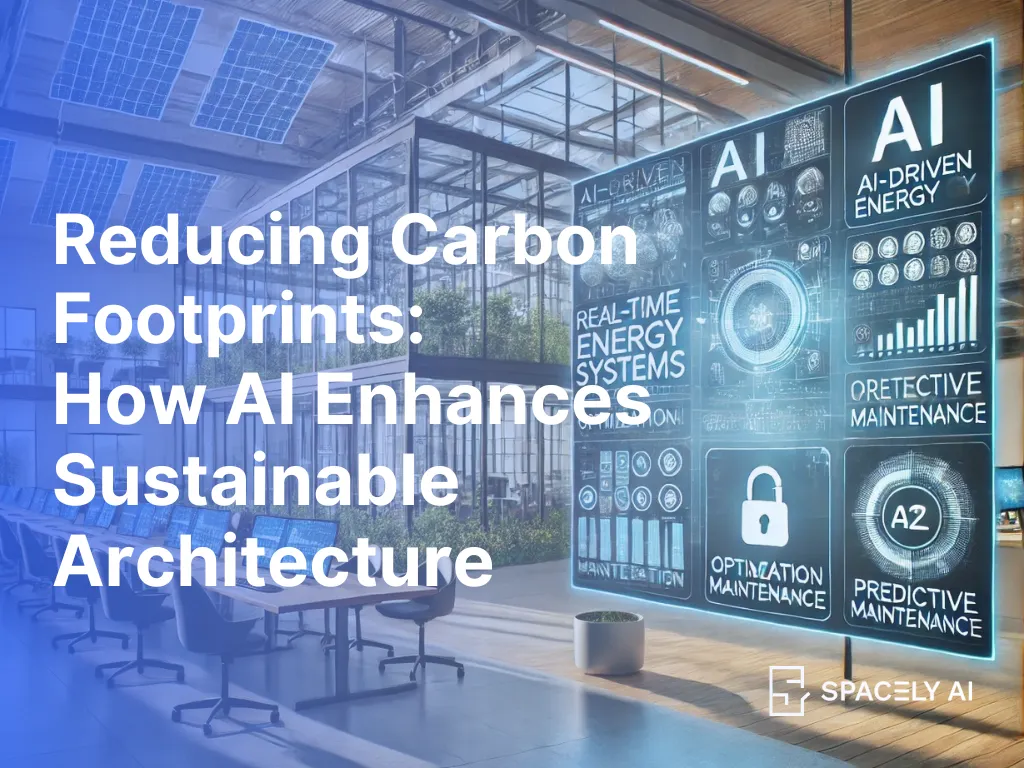
As the world faces the challenges of climate change, the need for sustainable architecture is more important than ever. Architects and designers are looking for ways to make buildings that are kinder to the environment. This is where AI comes in—a powerful tool that is helping to lead this change. From using materials more efficiently to making buildings more energy-efficient, AI is playing a key role in creating buildings that are not only functional and beautiful but also eco-friendly.
The Role of AI in Sustainable Architecture
Artificial Intelligence (AI) is changing the way we design buildings by making sustainable practices easier to implement. Through advanced technology and data analysis, AI can improve various parts of building design and construction, greatly reducing the carbon footprint of both new and existing structures.
Optimizing Material Usage
One of the best ways to reduce a building's carbon footprint is by choosing the right materials. AI can analyze data from many projects to find the most sustainable materials and construction methods.
- Material Efficiency: AI can suggest alternative materials that are just as strong but have a lower environmental impact. For example, AI might recommend using recycled steel or low-carbon concrete, which helps reduce the carbon emissions tied to construction.
- Waste Reduction: By accurately calculating how much material is needed, AI helps minimize waste, ensuring that resources are used efficiently. This not only lessens the environmental impact but also saves money.
Enhancing Energy Efficiency
AI is also crucial in designing buildings that use energy more efficiently, which is vital for reducing carbon footprints throughout the building’s life.
- Smart Energy Systems: AI can design and manage smart energy systems that optimize the use of natural light, heating, and cooling. These systems adjust to how the building is used and weather conditions, making sure that energy is used as efficiently as possible.
- Predictive Maintenance: AI can monitor building systems in real time, predicting when maintenance is needed. This keeps systems running at their best, preventing energy waste.
- Energy Modeling: AI tools can simulate how much energy a building will use during the design phase, allowing architects to make decisions that improve energy efficiency. For instance, AI can model how different insulation materials or window placements will affect heating and cooling needs.
Case Studies: AI in Action for Sustainable Architecture
Eco-Friendly Residential Complex
In a recent project, AI was used to design an eco-friendly residential complex. The AI analyzed local climate data to optimize the building's orientation and materials, cutting energy use by 30%. Additionally, AI-controlled systems managed lighting and HVAC, further reducing energy consumption. The result was a development that not only met but exceeded sustainability goals.
Green Office Building
A major office building project used AI from the start to lower its carbon footprint. By using AI to optimize the design, the architects were able to reduce material waste by 20%. The building also featured AI-driven energy systems that adapt to real-time conditions, significantly lowering energy costs and emissions.
Future Prospects: AI and Sustainable Architecture
As AI technology continues to improve, its ability to enhance sustainable architecture will grow. The future of AI in this field looks bright, with innovations that could further reduce carbon footprints and promote eco-friendly building practices.
- AI-Driven Design Tools: Future AI tools could offer even more advanced design capabilities, allowing architects to create buildings that are both more sustainable and more visually appealing.
- Automated Construction: AI could change the construction process itself, using robots to build structures more efficiently and with less waste.
- Lifecycle Assessment: AI could provide real-time assessments of buildings’ lifecycles, helping to ensure they remain sustainable throughout their existence.
Conclusion
AI is becoming a powerful tool in the push for sustainable architecture. By optimizing material usage and improving energy efficiency, AI is helping to reduce the carbon footprints of buildings worldwide. As technology continues to advance, AI’s role in sustainable design will only increase, making it an essential tool for architects and builders who are committed to eco-friendly practices. For those aiming to create buildings that are both beautiful and sustainable, using AI is not just an option—it’s a necessity.
If you enjoyed this content and want more interior design ideas, don't forget to subscribe to our blog. Stay tuned with Spacely AI's Design Diaries for the latest insights and innovations in design. Together, let's explore, innovate, and redefine the boundaries of design.
For more information and media inquiries, please contact
Website: spacely.ai
Facebook: facebook.com/spacelyai
Instagram: instagram.com/spacely.ai
X: x.com/spacelyai
Email: [email protected]